
Listen to Your Heart
Trust the part of you that already knows


The Sound Beneath the Noise
There’s a long-distance trail in Spain called the Camino de Santiago—a 500-mile pilgrimage people have walked for centuries to clear their heads, reset their lives, and find some kind of meaning again.
I remember one morning out there, fog sitting low over the fields, the sound of my boots the only thing breaking the silence. After years of noise—meetings, deadlines, divorce lawyers—my brain finally had nothing left to say.
What surprised me was what showed up underneath all that mental static. Not a big spiritual download. Just a simple, quiet knowing that said: You’re okay. Keep walking.
That voice wasn’t mystical. It was familiar. I’d just spent too many years drowning it out.
The Battle Between Head and Heart
Most men I know—myself included—were raised to solve everything with logic. You make the plan, you run the numbers, you push through.
It works—until it doesn’t.
The head is great for strategy, but when the ground shifts under you, it panics. It wants control. It demands certainty. And sometimes life just doesn’t hand you a map.
The “heart,” as people like to call it, isn’t about feelings or poetry. It’s about that inner read—the pattern recognition that comes from decades of experience. It’s what happens when instinct and memory shake hands.
You’ve felt it before: a gut sense that something’s off, or a pull toward something that makes zero logical sense but feels right.
That’s not emotion. That’s awareness.
When I First Trusted That Voice
Back in 2017, a few weeks after I learned my 30-year marriage was ending, I decided to move out. I had no plan, just a strong pull toward the water.
After looking around Portland, I found a small apartment on Hayden Island, overlooking a marina. I didn’t know why, but I knew that was where I needed to be.
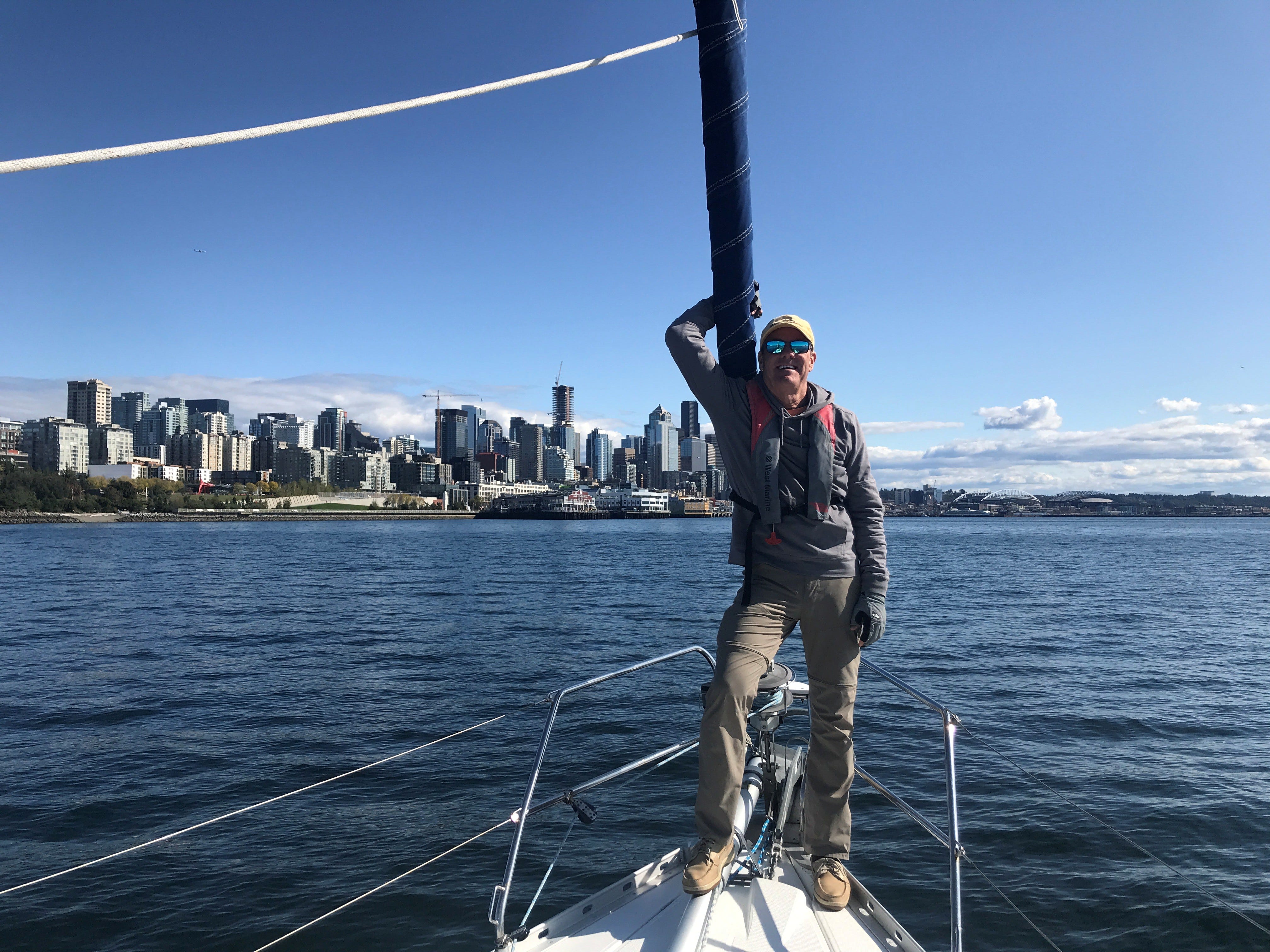
Turned out there were two sailing clubs right there—Passion Yachts, where I learned to sail, and Island Sailing Club, where I eventually became an instructor and earned my U.S. Coast Guard captain’s license.
All of that—every course, every new friend, every open-water crossing—started because I listened to a quiet gut feeling: Be near the water.
Looking back, that one decision changed the entire trajectory of my life.
The Language of the Heart
The problem is, we expect life to talk to us like an instruction manual. But it rarely does.
That inner compass doesn’t yell. It nudges. It shows up as tension when you’re off-course, calm when you’re aligned, or that strange peace when you choose something risky but right.
On the Camino, there were times I had no clue where I was headed. Signs pointed one way, but something in me said the other. Every time I trusted that pull, something good came of it—a helpful stranger, a needed rest, a small miracle of timing.
It’s not magic. It’s awareness tuned past noise.
You don’t have to call it intuition. Call it a gut check. Call it your read. Just know that it’s real—and it’s worth listening to.
Testing the Compass
Here’s the thing: the more you follow that internal read, the sharper it gets.
You can practice it anywhere:
At work: when the deal looks good on paper but something feels off—pause. Don’t rationalize it away.
In relationships: if your body tightens when you say “yes,” that’s a “no” trying to get out.
In daily life: sometimes the detour or delay you didn’t plan turns out to be the best thing that could’ve happened.
Listening doesn’t mean getting sentimental. It means trusting the data life has already written into you—the instincts earned through time, trial, and a few hard landings.
When You Stop Forcing the Map
Every major turn in my story—walking the Camino, teaching sailing, launching Bold Sabbatical—started as a quiet nudge that wouldn’t go away.
I used to think I had to see the whole plan. Now I know it’s more like sailing: you catch the wind you’ve got, adjust your heading, and trust you’ll find the next marker when it appears.
Life works the same way.
Once you stop forcing direction and start following rhythm, things line up. Not perfectly—but faithfully.
You don’t need to know the destination. You just need to keep tuning in.
The Quiet Takeaway
Listening to your heart isn’t about emotion. It’s about awareness. It’s knowing when to move, when to wait, and when to walk away.
Most of us already know what to do—we’re just scared to trust that knowing.
But once you start, you realize something powerful:
That voice inside you? It’s not guessing. It’s remembering.
And when you finally learn to trust it, you begin to see what was true all along—
Everything is connected.
Be Bold. Be Brave. Decide.
Fair Winds,
Captain Rickman
When logic runs out, intuition steps in. “Listen to Your Heart” captures that quiet moment when you finally hear your own truth.